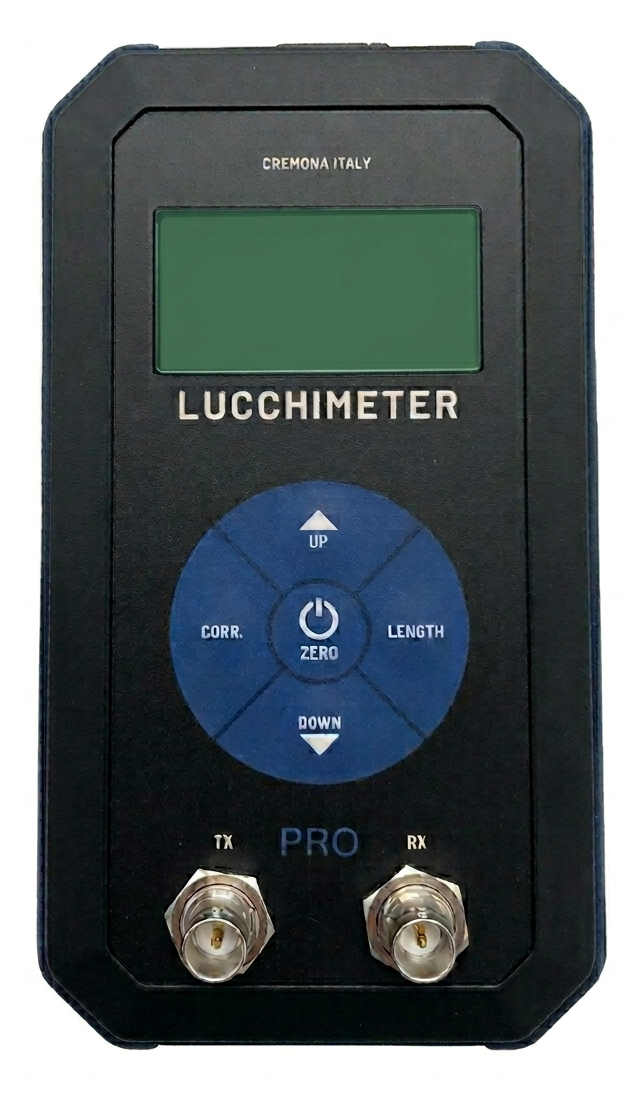
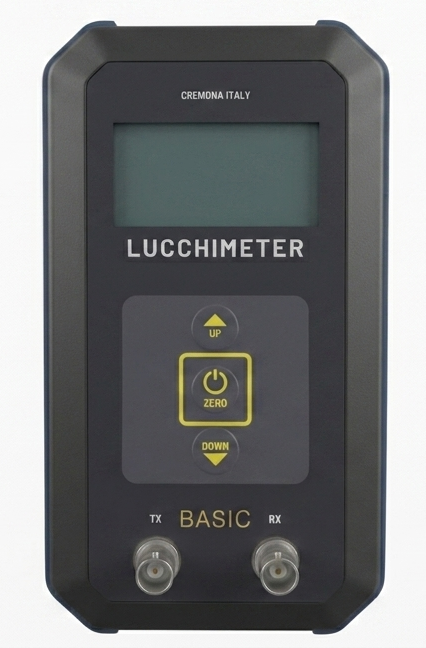
LucchiMeter · PRO and BASIC
Wood quality is a number
The LucchiMeter uses ultrasound to measure the speed of sound in tonewood: the number the whole world calls the “Lucchi value”.
The name that became a measurement
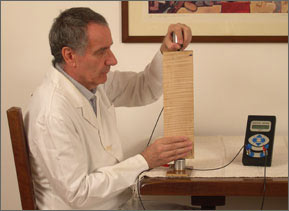
In 1983, in Cremona, master bow maker Giovanni Lucchi was looking for an objective way to choose the Pernambuco for his bows. He found it by measuring the speed at which sound travels through the wood: a precise physical quantity, expressed in m/sec, taken non-destructively with two ultrasonic probes.
Forty years on, bow makers, violin makers and guitar makers all over the world call that speed the “Lucchi value”. It remains, to all effects, the speed of sound — but it carries the name of the man who taught the world to measure it.
How do you choose your wood today?
By eye. By weight. By tapping the plate and listening. By experience. And yet two plates that look identical can transmit sound in completely different ways — and often you find out only once the instrument is finished, when it is too late.
The LucchiMeter measures that difference before you even start working the wood: on plates, bow sticks, whole logs and finished instruments.
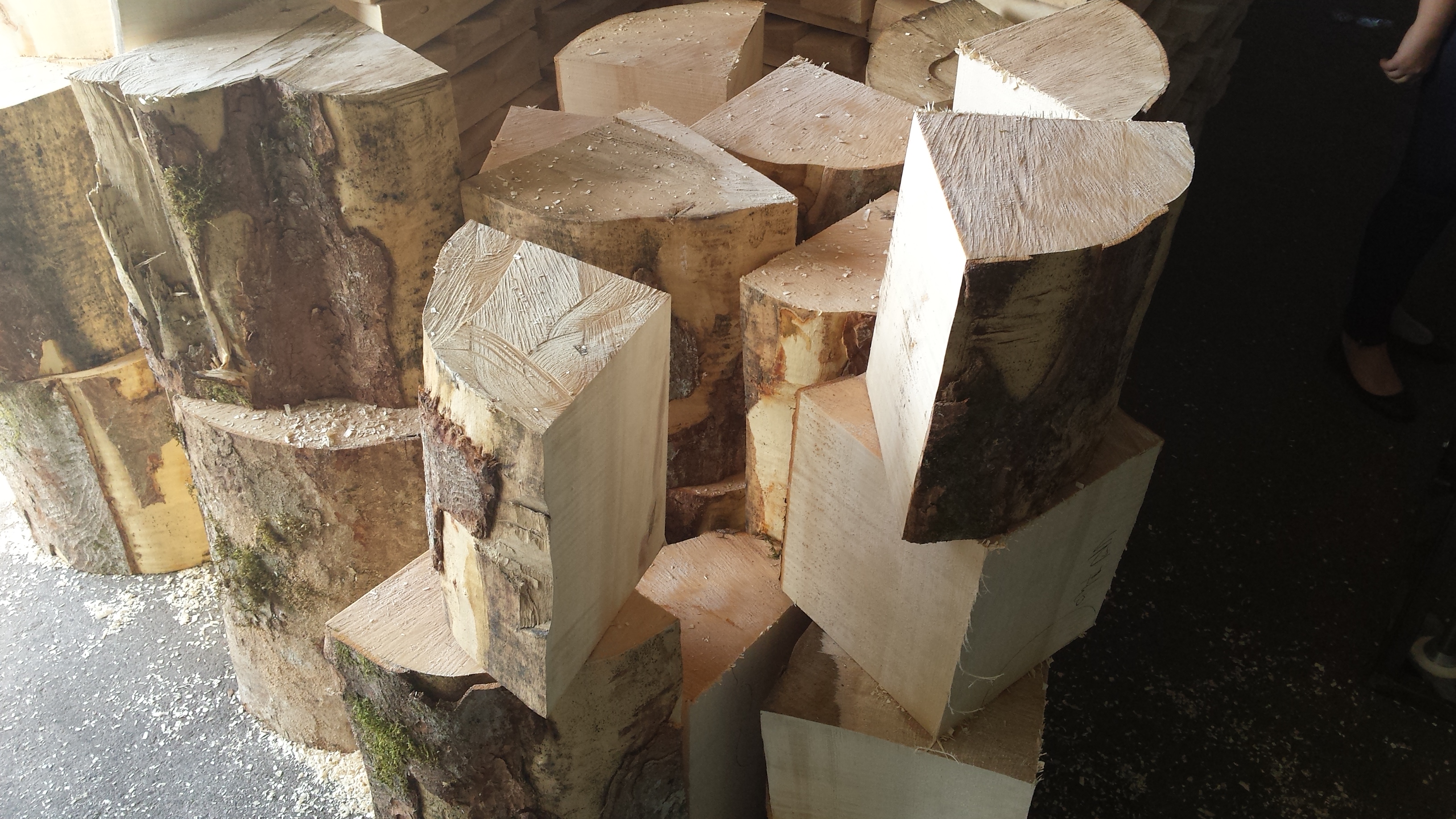
The stiffest wood is not the best
Instinct says: the harder and stiffer the wood, the better it sounds. It is not so. Stiffness — Young's modulus — measures the force of the material, not its ability to vibrate and return harmonics. What matters is the speed of sound.
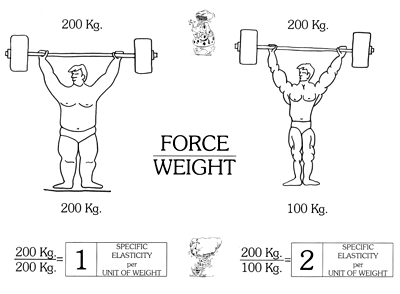
| Material | Speed (m/sec) | Density | Q factor | Specific elasticity | Young’s modulus |
|---|---|---|---|---|---|
| Spruce 1 | 6300 | 0.39 | 210 | 396.9 | 119 |
| Spruce 2 | 4280 | 0.65 | 65 | 183.1 | 119 |
Who are you?
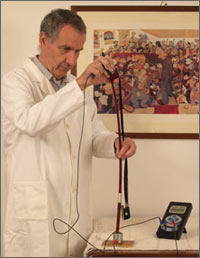
Bow makers
Selecting Pernambuco for bows — responsive, rich in harmonics. The field in which the LucchiMeter was born, in 1983.
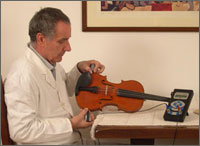
Violin makers
Spruce for the soundboard, maple for back and ribs. Longitudinal and transverse speed to read the structure of the wood.
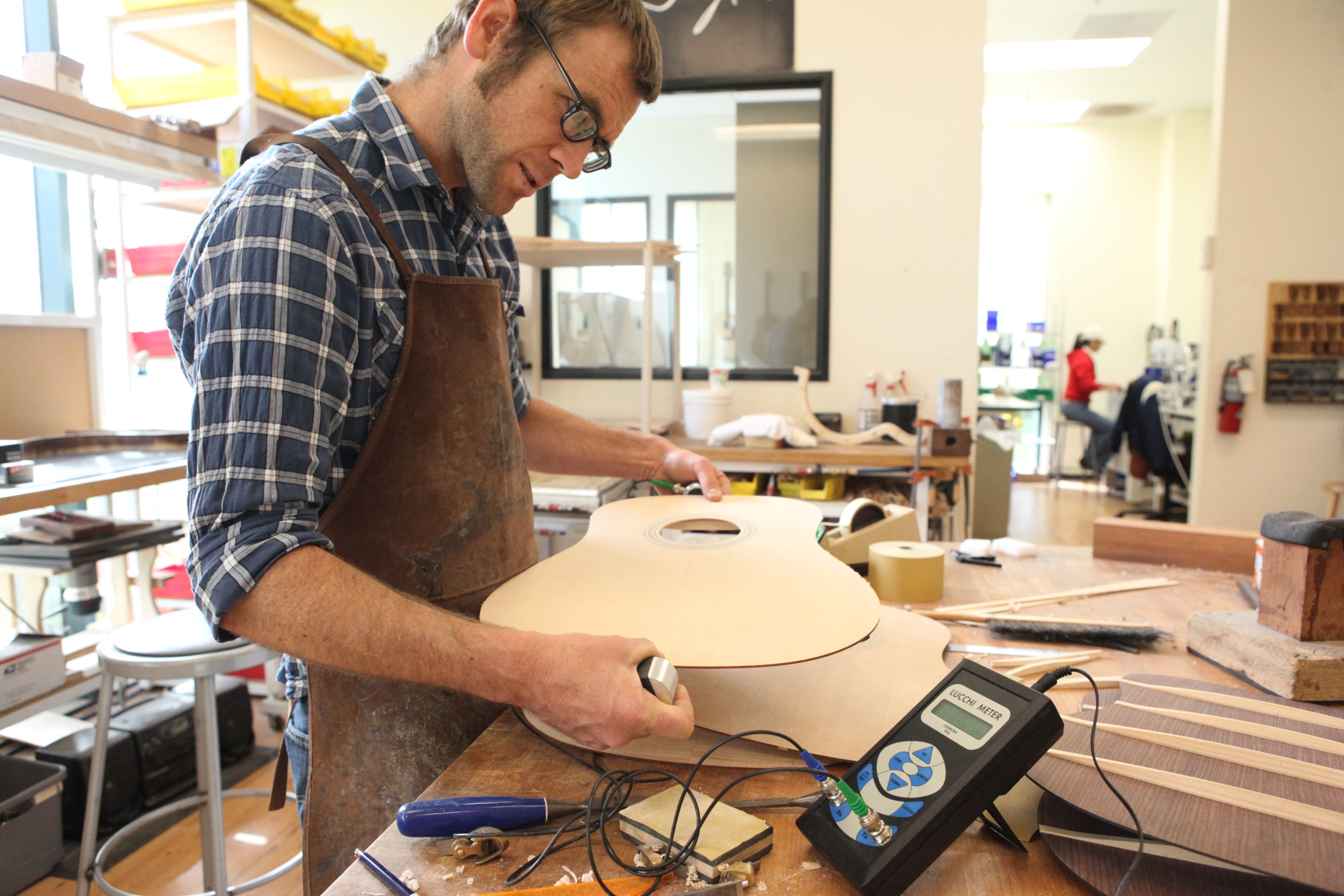
Guitar makers
Spruce or cedar tops, rosewood or maple backs: repeatable criteria to compare different batches of wood.
What they say about us
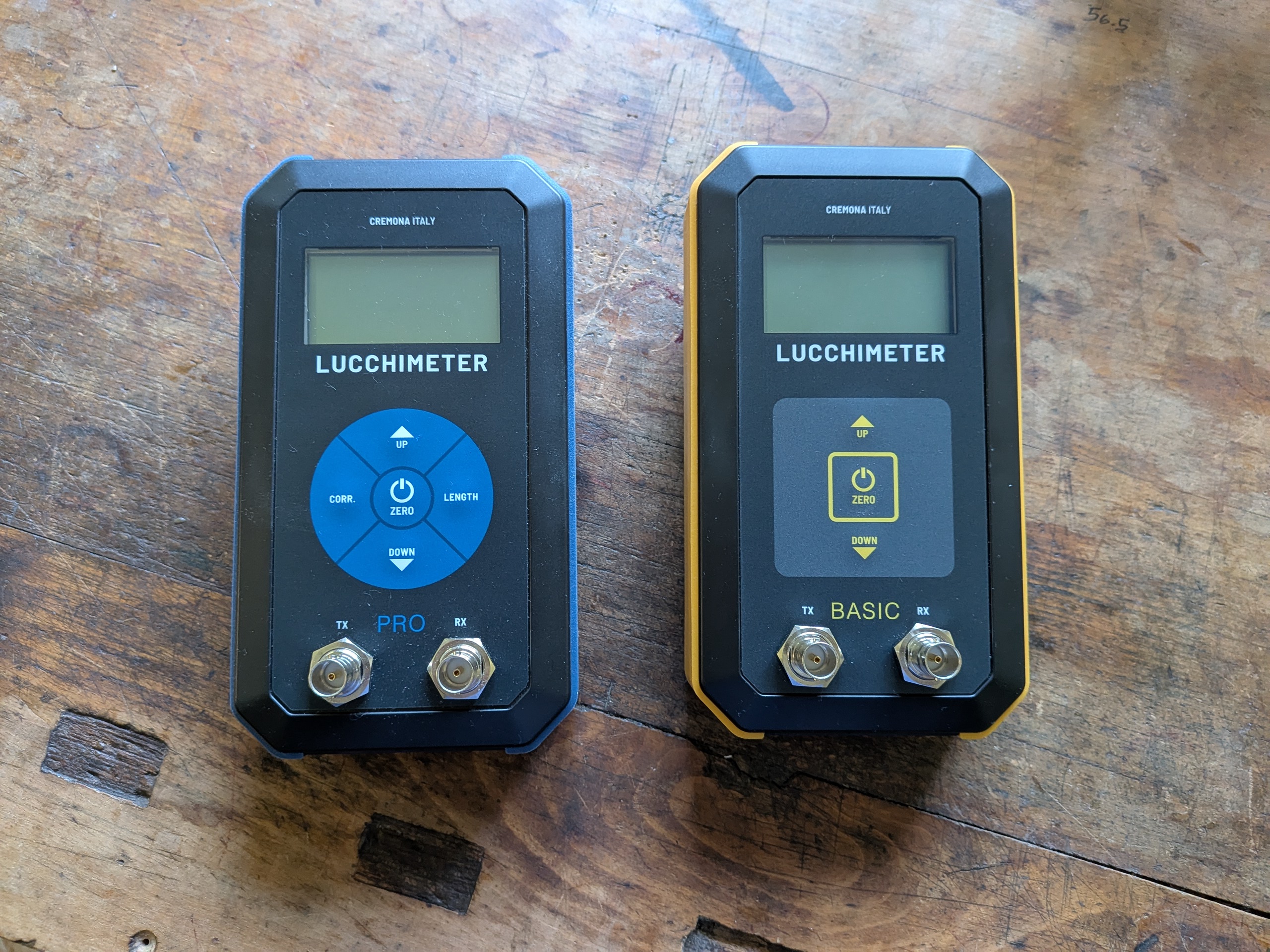
Two editions, one measurement
Same measuring electronics, same complete kit. What changes is the level of calculation automation.